A botched move lands on the agent who made the referral. The client won't remember that the mover double-booked the truck; they'll remember who recommended them.
That makes vendor selection a real professional risk, and it's worth being precise about what actually separates a reliable moving company from one that will cost you a client relationship. Some of it is technology. More of it is regulatory compliance and how they write estimates — and that's the part most articles on this subject get wrong.
Start With the Estimate, Because That's Where Disputes Come From
Nearly every moving horror story is a pricing story. The truck arrives loaded, the price has doubled, and the customer is told the goods won't be released until they pay.
For interstate moves, this is governed by federal rules, and understanding them is more useful than any software feature.
The two kinds of estimate
Under FMCSA regulations, a binding estimate is a written agreement made in advance that guarantees total cost based on the quantities and services listed. You pay 100% of it at delivery. If items or services are added — or unforeseen conditions like stairs, elevators or parking permits arise — the mover must prepare a new binding estimate covering them.
A non-binding estimate is the mover's projection, not a guarantee. Final charges depend on actual weight, services delivered and the mover's published tariff.
The 110% rule
This is the protection worth knowing by name. On a non-binding interstate estimate, a mover cannot require payment of more than 110% of the estimate at the time of delivery. Anything beyond that must be billed at least 30 days later.
Put differently: a carrier must release the shipment on payment of 100% of a binding estimate, or 110% of a non-binding one. A mover refusing to unload until a much larger sum is paid is, in most cases, violating federal law — the practice usually described as holding a shipment hostage.
One important limit: the rule does not cover "post-contract services" not listed on the original estimate. Those are ordered separately. This exception has weakened the protection in practice, which is exactly why an accurate initial inventory matters so much.
The correction that matters
You'll often read that a tablet-based estimating tool lets an estimator "generate a legally binding quote on the spot." That isn't how it works.
Software doesn't confer binding status. A binding estimate is binding because it is a written agreement meeting specific regulatory requirements, based on a survey of the goods, agreed in advance. The tablet makes the inventory faster and more accurate and produces the document more quickly. The legal force comes from the document's contents and the process behind it.
The distinction matters for anyone making referrals. What you want to know is which type of estimate the mover issues, not what hardware they carry.
Compliance Checks That Take Five Minutes
Before adding a mover to a referral list, verify:
- USDOT and MC numbers. Interstate household goods carriers must be registered with FMCSA. Look the numbers up rather than accepting them on a website.
- Mover or broker? A broker arranges transport but doesn't operate trucks or handle goods. Legitimate operators state which they are. Many of the worst customer experiences involve brokers who sell a job that no carrier then wants at that price.
- Required disclosures. Interstate movers must furnish the FMCSA booklet Your Rights and Responsibilities When You Move and other documents before executing a contract. A mover who doesn't is out of compliance from the first step.
- Physical survey. For interstate moves, estimates should be based on a survey of the goods rather than a phone guess.
- Arbitration program. Interstate carriers are required to have one for individual shippers. Ask what theirs is.
- State registration for intrastate moves. Moves within a state fall under state regulators, not FMCSA, with different rules. Check the relevant state authority.
A mover who answers these easily is telling you something meaningful. One who deflects is telling you something too.
Valuation Coverage Is Not Insurance
This catches clients constantly and is worth explaining before the move, not after.
Interstate movers must offer two levels of liability. Released Value Protection is provided at no extra charge and covers goods at a rate per pound per article — which means a heavy, cheap item is covered reasonably and a light, valuable one is barely covered at all. Full Value Protection costs extra and covers repair, replacement or cash settlement.
Clients frequently assume they are insured. They are covered at whichever level they selected, and the default is the minimal one. Advising a client to read that section before signing is genuinely valuable and costs you nothing.
Claims for loss or damage on interstate moves are subject to filing deadlines — confirm the current window with the carrier and get it in writing.
Where Dispatch Software Genuinely Helps
With the compliance groundwork established, the operational tooling does matter. Realistically, here is what it changes.
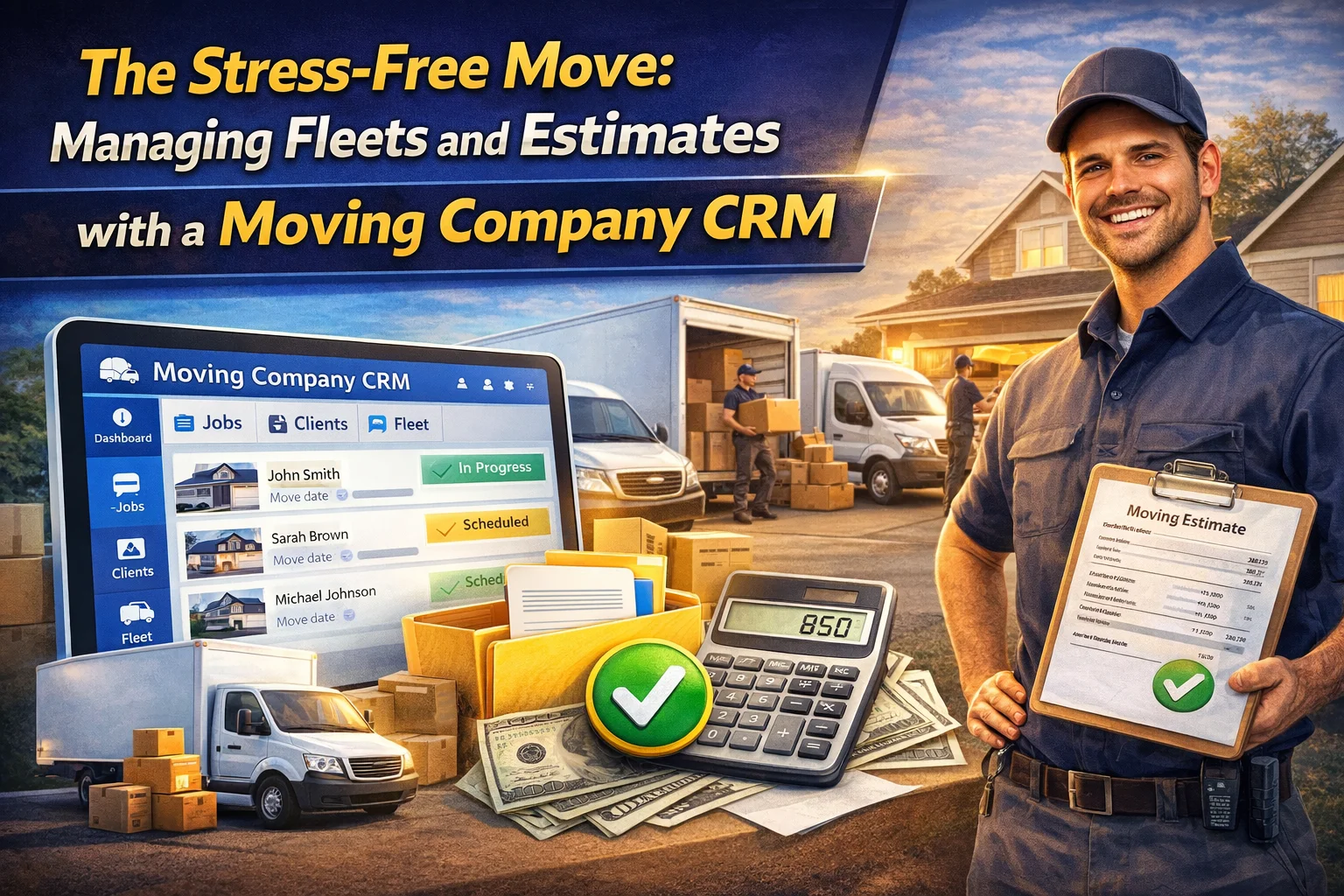
Visibility on the day. A dispatcher who can see where each crew is and how a load-out is progressing can warn a client about a delay two hours ahead rather than two hours late. Most complaints about movers are communication failures, not competence failures.
Faster, more accurate inventories. A structured inventory built on a tablet during the survey produces a better estimate than a handwritten list. Better estimates mean fewer disputes at delivery — which is the whole game.
Reschedule handling. Closings slip. Wires get delayed, title issues surface, keys aren't available. A dispatcher who can reshuffle the schedule and issue revised paperwork quickly turns a crisis into an inconvenience.
One caution on that last point: the original version of this argument suggests software will "automatically calculate overnight storage fees and update the invoice." Any charge for storage-in-transit or truck detention must be a term the customer agreed to, disclosed in advance. Software can apply an agreed rate. It cannot create an entitlement to charge one, and a mover treating it that way is heading for a dispute.
Condition documentation. Timestamped photos of floors, doorframes and walls before and after, stored against the job record, resolve damage disputes far faster than argument. Useful for the mover, the client and the property owner alike.
Job-level margin analysis. For the operator, this is the real financial benefit — seeing which jobs, crews and estimators actually make money, rather than discovering the answer annually.
What Software Doesn't Fix
Worth stating plainly, because vendor material never does.
| Problem | Does software solve it? |
|---|---|
| Chronic under-bidding to win work | It reveals the pattern. Fixing it is a pricing decision. |
| Untrained or careless crews | No. This is hiring and training. |
| Too few trucks for the season | No. Capacity is capacity. |
| Deliberately misleading estimates | No — and a polished system can make a bad operator look credible. |
| Poor communication culture | Only partly. Automated messages help; a crew that doesn't call ahead still doesn't call ahead. |
That fourth row deserves emphasis for anyone building a referral list. Professional-looking technology is not a proxy for integrity. The compliance checks above tell you considerably more.
For Property Managers: Turnover Coordination
Turnover between the 31st and the 1st is its own discipline, and the friction points are specific: elevator reservations, loading dock windows, protection for common areas, and certificates of insurance naming the building.
The operationally useful thing is a mover who confirms these arrangements in advance with the building rather than arriving to discover the freight elevator is booked. Whether they coordinate that through software or a phone call matters less than whether they do it consistently.
Ask for their certificate of insurance and confirm it meets your building's requirements before the day, not on it.
Referral Checklist
- USDOT and MC numbers verified independently
- Confirmed as a carrier, not a broker — or disclosed as a broker
- Issues written estimates based on a physical survey
- Explains binding vs non-binding clearly when asked
- Provides required federal disclosures before contract
- Explains valuation coverage options without prompting
- Carries adequate insurance and can produce certificates
- Communicates proactively about timing changes
Software supports several of these. None of them depends on it.
Common Questions
Can a mover charge more than the estimate?
On a binding interstate estimate, no — not at delivery, unless items or services were added, which requires a new estimate. On a non-binding one, they cannot require more than 110% at delivery; any excess is billed at least 30 days later. Post-contract services not on the original estimate sit outside this rule.
What if a mover refuses to unload until I pay more?
Carriers must release the shipment on payment of 100% of a binding estimate or 110% of a non-binding one. Withholding goods beyond that is generally a violation of federal law, and complaints can be filed with FMCSA.
Is my stuff insured during the move?
Not automatically in the way most people assume. You have valuation coverage at the level you selected — the free default is limited, per-pound protection. Full Value Protection costs extra. Check which one is on the contract.
Do these rules apply to local moves?
No. FMCSA rules cover interstate moves. Intrastate moves fall under state regulators with different requirements. Check the relevant state agency.
Does a mover using good software mean they're reliable?
It's a positive signal about operational maturity, not a guarantee. Registration status, estimate practice and disclosure compliance tell you more.
Regulatory information reflects FMCSA rules for interstate household goods moves as published; rules change and specific circumstances vary. Verify current requirements at fmcsa.dot.gov and consult the current edition of Your Rights and Responsibilities When You Move. General information, not legal advice.